Harmonic mixing cheat sheet: the Camelot wheel, every key, every move
The 24 keys in Camelot, Open Key and musical notation, and the 288 moves the transition table recommends between them — generated from the same table the set analyser scores with, not copied from it.
Camelot ↔ Open Key ↔ musical key
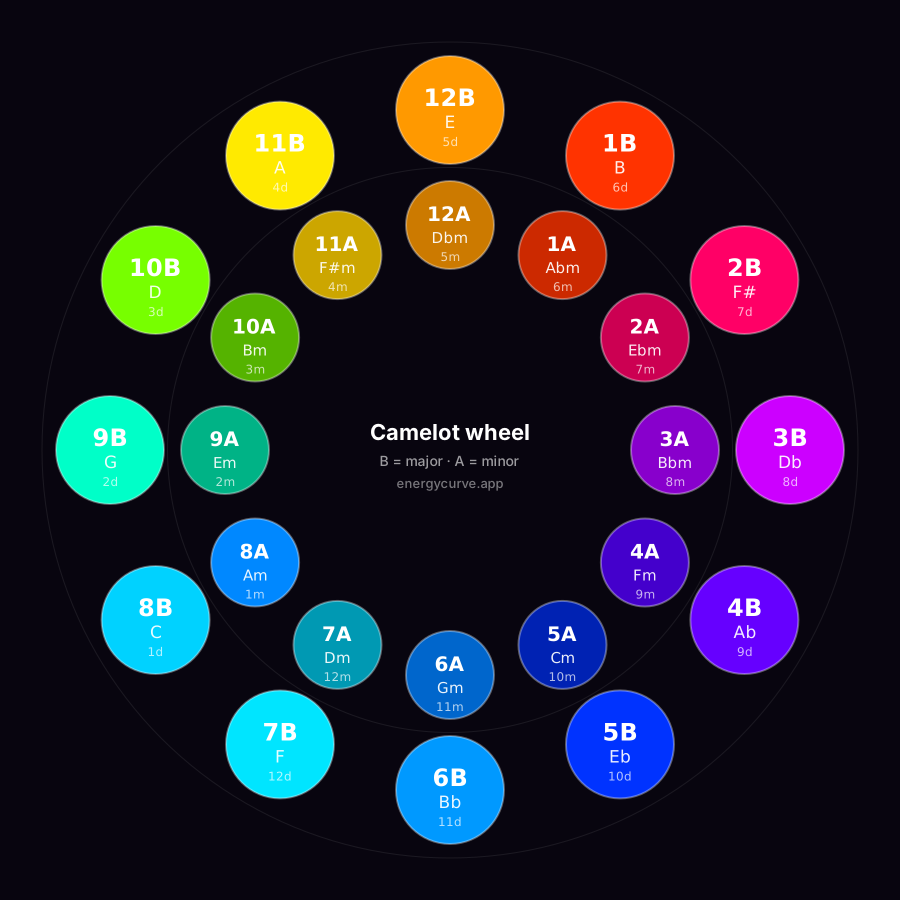
Ring B is major, ring A is minor, and a number is shared by a major key and its relative minor. Open Key is the same wheel rotated: Camelot 8 is Open Key 1.
| Camelot | Key | Short | Open Key |
|---|---|---|---|
| 1A | A♭ minor | Abm | 6m |
| 1B | B major | B | 6d |
| 2A | E♭ minor | Ebm | 7m |
| 2B | G♭ major | F# | 7d |
| 3A | B♭ minor | Bbm | 8m |
| 3B | D♭ major | Db | 8d |
| 4A | F minor | Fm | 9m |
| 4B | A♭ major | Ab | 9d |
| 5A | C minor | Cm | 10m |
| 5B | E♭ major | Eb | 10d |
| 6A | G minor | Gm | 11m |
| 6B | B♭ major | Bb | 11d |
| 7A | D minor | Dm | 12m |
| 7B | F major | F | 12d |
| 8A | A minor | Am | 1m |
| 8B | C major | C | 1d |
| 9A | E minor | Em | 2m |
| 9B | G major | G | 2d |
| 10A | B minor | Bm | 3m |
| 10B | D major | D | 3d |
| 11A | G♭ minor | F#m | 4m |
| 11B | A major | A | 4d |
| 12A | D♭ minor | Dbm | 5m |
| 12B | E major | E | 5d |
What to play next, from every key
One row per key playing now. Each of the 8 columns is a kind of move; a code in parentheses is that level's second choice, for when the first is not in the crate. A key that appears in no column of its row is not recommended from there.
| Playing | Perfect match | One step up | Energy boost | Long lift | One step down | Energy drop | Long release | Mood change |
|---|---|---|---|---|---|---|---|---|
| 1A | 1A, 2B | 1B, 2A | 10A | 3A, (8A) | 12A | 4A | 11A, (6A) | 4B |
| 2A | 2A, 3B | 2B, 3A | 11A | 4A, (9A) | 1A | 5A | 12A, (7A) | 5B |
| 3A | 3A, 4B | 3B, 4A | 12A | 5A, (10A) | 2A | 6A | 1A, (8A) | 6B |
| 4A | 4A, 5B | 4B, 5A | 1A | 6A, (11A) | 3A | 7A | 2A, (9A) | 7B |
| 5A | 5A, 6B | 5B, 6A | 2A | 7A, (12A) | 4A | 8A | 3A, (10A) | 8B |
| 6A | 6A, 7B | 6B, 7A | 3A | 8A, (1A) | 5A | 9A | 4A, (11A) | 9B |
| 7A | 7A, 8B | 7B, 8A | 4A | 9A, (2A) | 6A | 10A | 5A, (12A) | 10B |
| 8A | 8A, 9B | 8B, 9A | 5A | 10A, (3A) | 7A | 11A | 6A, (1A) | 11B |
| 9A | 9A, 10B | 9B, 10A | 6A | 11A, (4A) | 8A | 12A | 7A, (2A) | 12B |
| 10A | 10A, 11B | 10B, 11A | 7A | 12A, (5A) | 9A | 1A | 8A, (3A) | 1B |
| 11A | 11A, 12B | 11B, 12A | 8A | 1A, (6A) | 10A | 2A | 9A, (4A) | 2B |
| 12A | 12A, 1B | 12B, 1A | 9A | 2A, (7A) | 11A | 3A | 10A, (5A) | 3B |
| 1B | 1B, 12A | 2B | 10B | 3B, (8B) | 1A, 12B | 4B | 11B, (6B) | 10A |
| 2B | 2B, 1A | 3B | 11B | 4B, (9B) | 2A, 1B | 5B | 12B, (7B) | 11A |
| 3B | 3B, 2A | 4B | 12B | 5B, (10B) | 3A, 2B | 6B | 1B, (8B) | 12A |
| 4B | 4B, 3A | 5B | 1B | 6B, (11B) | 4A, 3B | 7B | 2B, (9B) | 1A |
| 5B | 5B, 4A | 6B | 2B | 7B, (12B) | 5A, 4B | 8B | 3B, (10B) | 2A |
| 6B | 6B, 5A | 7B | 3B | 8B, (1B) | 6A, 5B | 9B | 4B, (11B) | 3A |
| 7B | 7B, 6A | 8B | 4B | 9B, (2B) | 7A, 6B | 10B | 5B, (12B) | 4A |
| 8B | 8B, 7A | 9B | 5B | 10B, (3B) | 8A, 7B | 11B | 6B, (1B) | 5A |
| 9B | 9B, 8A | 10B | 6B | 11B, (4B) | 9A, 8B | 12B | 7B, (2B) | 6A |
| 10B | 10B, 9A | 11B | 7B | 12B, (5B) | 10A, 9B | 1B | 8B, (3B) | 7A |
| 11B | 11B, 10A | 12B | 8B | 1B, (6B) | 11A, 10B | 2B | 9B, (4B) | 8A |
| 12B | 12B, 11A | 1B | 9B | 2B, (7B) | 12A, 11B | 3B | 10B, (5B) | 9A |
Camelot and the circle of fifths are the same wheel
The circle of fifths is the musician's arrangement of the twelve major keys so that each one sits next to the two it shares the most notes with: a step clockwise goes up a perfect fifth, and neighbours differ by a single accidental. The Camelot wheel is that exact circle with the note names replaced by numbers. 8B is C major; every step clockwise adds one to the number and a fifth to the key, so 9B is G major and 7B is F major. The relative minor of each key — the one built on the same notes — takes the same number on ring A, which is why A minor is 8A.
The DJ notation exists because a booth is not a place to work out that G major and E minor share a key signature. With numbers, the rule becomes arithmetic: same number is safe, one number either way is safe, and the same number on the other ring is safe. Everything the table below adds — the boosts, the drops, the mood change — is a named move of a fixed number of semitones, which the numbers make just as easy to read.
Open Key is the same idea with the wheel rotated five positions and different letters (d for major, m for minor). Nothing in it disagrees with Camelot; the two only fall out with each other when one library stores both and nobody converts.
The wheel, as a file
An SVG of the wheel with all 24 codes, their musical keys and their Open Key codes, drawn from the same data as the tables above. It scales to any size without blurring, opens in any browser, and prints.
Where this comes from
The moves are the harmonic transition table EnergyCurve adopted from an alpha user's reference file: 24 rows, 12 recommended targets each, 288 moves in all. Nothing on this page is typed in by hand — the tables and the SVG are rendered from the constant the set analyser scores against, so if that table ever changes, this page changes with it. The interactive version, where you pick a key and the wheel lights up, is the free Camelot wheel tool.
Frequently asked
Is the Camelot wheel the same as the circle of fifths?
Yes — it is the circle of fifths with numbers instead of note names. A step clockwise is up a fifth in both. Camelot adds a second ring for the relative minors and calls the two rings B (major) and A (minor), so a DJ can match keys by comparing numbers instead of reading key signatures.
What is the musical key for a Camelot code?
Read it off the first table: every code is listed with its musical key in full and in the short spelling DJ software writes. 8B is C major and 8A is A minor; each number up is a fifth up. The table is generated from the converters the app uses, so it matches what EnergyCurve shows in your track list.
Where do the recommended moves come from?
From a harmonic transition table an alpha user mixes by, which EnergyCurve audited and adopted in full: every cell is a fixed shift of the tonic, and the relation is symmetric. It replaced the old rule of counting steps around the wheel, which called half the valid moves a clash. The set analyser scores transitions with this same table.
Can I download the Camelot wheel?
Yes, as an SVG, free and without an account. It is drawn at build time from the same key data as the tables, so it carries every Camelot code with its musical key and Open Key code, and it scales to any size for printing or a phone lock screen.